

Are plain bandages flexible?
Aug 07, 2025
In the world of medical supplies, the question of whether plain bandages are flexible is one that often arises. As a supplier of plain bandages, I've had the opportunity to delve deep into this topic, considering various aspects such as the materials used, the intended applications, and the performance in real - world scenarios.
Understanding Plain Bandages
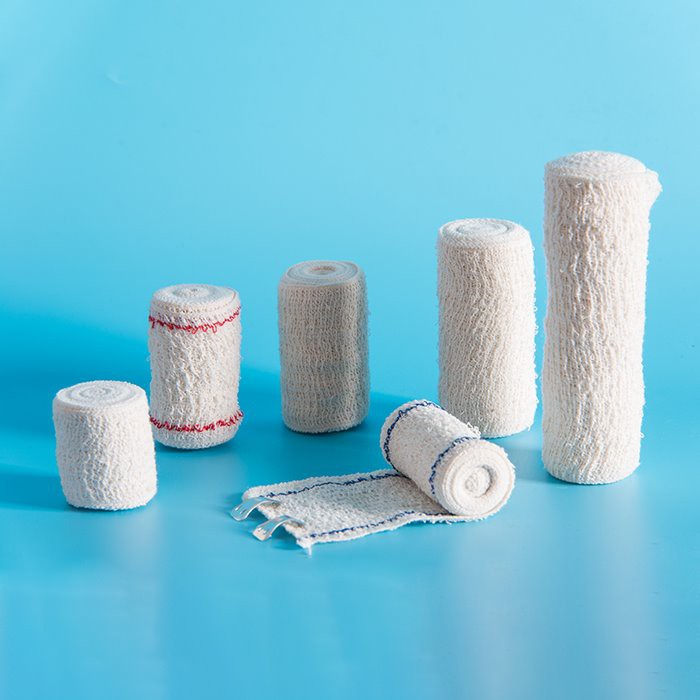
Plain bandages are a staple in the medical and first - aid fields. They are typically made from materials like cotton, gauze, or a combination of fibers. These bandages are known for their simplicity and versatility. Unlike some specialized bandages, plain bandages do not have added features such as adhesives or elastic properties built - in.
The flexibility of a bandage is crucial as it determines how well it can conform to different body parts and perform its intended function. For example, when treating a wound on a joint, a flexible bandage can move with the joint without causing discomfort or coming loose.
Factors Affecting the Flexibility of Plain Bandages
Material Composition
The material from which a plain bandage is made plays a significant role in its flexibility. Cotton bandages are soft and breathable, which gives them a certain degree of flexibility. They can be easily wrapped around body parts and contour to some extent. However, compared to more elastic materials, their ability to stretch and conform tightly is limited.
Gauze bandages, on the other hand, are often more lightweight and have a looser weave. This makes them highly flexible, allowing for easy manipulation around irregularly shaped wounds or body parts. They can be folded, bent, and wrapped in various ways without losing their integrity.
Weave and Thickness
The weave pattern of a plain bandage also affects its flexibility. A tight weave may make the bandage stiffer and less flexible, while a loose weave allows for more movement and stretch. Additionally, the thickness of the bandage matters. Thicker bandages may be less flexible as they are more rigid and less likely to conform to curves. Thinner bandages, in contrast, are generally more pliable and can be wrapped more easily around different body areas.
Applications and Flexibility Requirements
Wound Dressing
When used as a wound dressing, plain bandages need to be flexible enough to cover the wound securely without causing excessive pressure or irritation. For small, superficial wounds on flat areas of the body, a less flexible bandage may be sufficient. However, for wounds on joints like the knees, elbows, or fingers, a highly flexible bandage is essential. The bandage must be able to move with the joint during normal movement to prevent the wound from reopening and to ensure proper healing.
Support and Compression
In some cases, plain bandages are used for support and compression. For example, in the treatment of minor sprains or strains, a bandage can be wrapped around the affected area to provide stability. While plain bandages are not as elastic as Spandex Crepe Bandage, they can still offer a certain level of support when wrapped tightly. The flexibility of the bandage is important here as well, as it needs to conform to the shape of the injured limb and maintain its position during movement.
Comparing with Elastic Bandages
Elastic bandages, such as Sprained Ankle Elastic Bandage and Sprained Wrist Elastic Bandage, are specifically designed to stretch and provide a high level of compression. They are made from materials like latex or spandex, which give them excellent elasticity.
Compared to plain bandages, elastic bandages are much more flexible in terms of stretchability. They can be stretched to a greater extent and then return to their original shape. This property makes them ideal for applications where a high degree of compression and support is required, such as in the treatment of severe sprains or in post - surgical recovery.
However, plain bandages have their own advantages. They are generally more breathable, which can be beneficial for wound healing. They are also less likely to cause allergic reactions, making them a safer choice for patients with sensitive skin.
Real - World Performance
In real - world scenarios, the flexibility of plain bandages is often put to the test. In a first - aid situation, a medical professional needs to be able to quickly and easily wrap a bandage around a wound or injury. The flexibility of the bandage determines how efficiently this can be done.
For example, in a sports injury setting, where athletes may need immediate treatment for a sprain or a cut, a flexible plain bandage can be wrapped around the affected area without causing discomfort to the athlete. The bandage can stay in place during the athlete's movement, providing basic protection until more advanced treatment can be administered.
Conclusion
So, are plain bandages flexible? The answer is yes, but to a varying degree. Their flexibility depends on factors such as material composition, weave, and thickness. While they may not have the same level of stretchability as elastic bandages, plain bandages offer a good balance of flexibility, breathability, and safety.
If you are in the market for high - quality plain bandages, we are here to serve you. Our plain bandages are carefully crafted to ensure the right level of flexibility for a wide range of applications. Whether you are a medical facility, a first - aid provider, or an individual looking for reliable bandages, we can meet your needs. Contact us to discuss your requirements and start a procurement negotiation.

References
- "Medical Bandages: Materials and Applications" - Journal of Medical Supplies Research
- "The Role of Flexibility in Bandage Performance" - International Journal of Wound Care