

Are there any special instructions for using a crepe elastic bandage on children?
Jan 21, 2026
When it comes to using a crepe elastic bandage on children, there are indeed several special instructions that parents, caregivers, and medical professionals should be aware of. As a supplier of high - quality crepe elastic bandages, we understand the importance of proper usage, especially when it involves the well - being of children.
Understanding the Basics of Crepe Elastic Bandages
Crepe elastic bandages are essential medical tools widely used for mild injuries, support, and compression. Our Elastic Compression Bandage provides the right amount of pressure to reduce swelling and support joints. Its elastic nature allows for movement while still maintaining a therapeutic effect.
Another product we offer is the Spandex Crepe Bandage. This type of bandage is made with spandex, which gives it enhanced stretchability and a more comfortable fit. It is suitable for children as it can adapt well to their smaller body parts and active movements.
Special Considerations for Children
Size and Fit
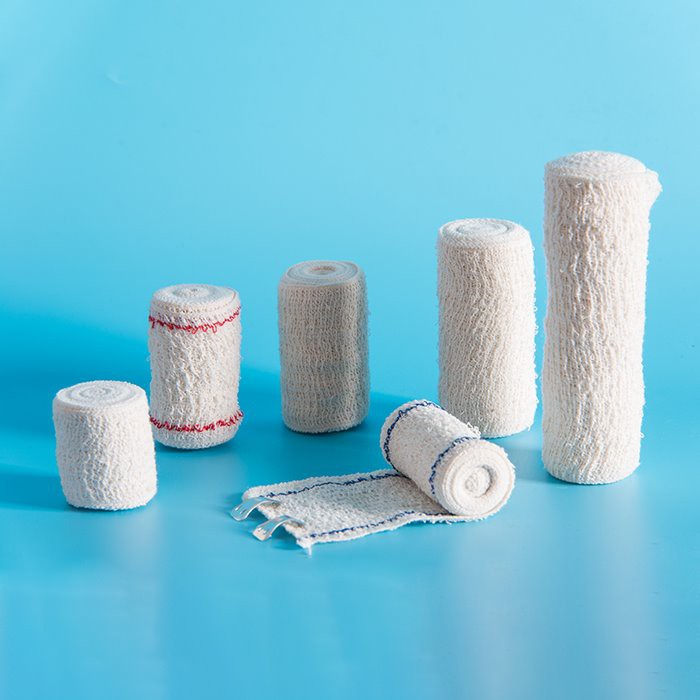
Children come in all shapes and sizes, and it's crucial to choose the right size of crepe elastic bandage. A bandage that is too large may not provide adequate compression, while one that is too small can be too tight and restrict blood flow. Measure the child's limb carefully before applying the bandage. For smaller children, a narrower bandage width is usually more appropriate. For example, a 2 - inch bandage might be suitable for a toddler's wrist, while a 3 - or 4 - inch bandage could be used for an older child's ankle.

Skin Sensitivity
Children generally have more sensitive skin than adults. Before applying the bandage, check the child's skin for any signs of irritation, rashes, or open wounds. If there are any skin issues, it's best to consult a doctor before using the bandage. Our bandages are made from hypoallergenic materials to minimize the risk of skin reactions. However, still monitor the child's skin regularly during use. If redness, itching, or swelling occurs, remove the bandage immediately.
Comfort and Mobility
Children are naturally active, so the bandage should not restrict their movement too much. Make sure the bandage is wrapped in a way that allows the child to move the affected limb gently. Our Sprained Wrist Elastic Bandage is designed to offer support while enabling a certain degree of mobility, which is especially important for children who may not be able to sit still for long periods.
Application of Crepe Elastic Bandages on Children
Before Application
Wash your hands thoroughly to prevent the spread of germs to the child's wound or the area to be bandaged. If the area is dirty, clean it gently with mild soap and water and pat it dry. This helps to reduce the risk of infection.
Wrapping Technique
- Start at the Distal End: Begin wrapping the bandage at the farthest point from the child's body, such as the fingers if wrapping the wrist or the toes if wrapping the ankle. This helps to promote proper blood circulation.
- Overlap the Layers: Overlap each layer of the bandage by about half of its width. This ensures even compression and prevents gaps that could lead to uneven pressure distribution.
- Avoid Tight Turns: When wrapping around joints, avoid making sharp or tight turns as this can cause bunching and discomfort. Instead, make smooth, gradual turns.
- Secure the End: Once you have wrapped the affected area, secure the end of the bandage with the provided fasteners. Make sure the bandage is not too loose that it slips off but also not so tight that it cuts off circulation.
Monitoring After Application
Check the child's fingers or toes (if the bandage is on an arm or leg) regularly for signs of poor circulation, such as blueness, coldness, numbness, or tingling. If any of these symptoms occur, the bandage may be too tight, and you should loosen it immediately. Also, ask the child if they feel any discomfort or pain. A child may not always be able to express their discomfort clearly, so it's important to be observant.
Usage Duration
Do not keep the bandage on for an extended period without checking. For minor injuries, the bandage can be worn during the day and removed at night to allow the skin to breathe. In some cases, a doctor may recommend continuous use for a certain number of hours, but always follow their advice. Prolonged use of a bandage can increase the risk of skin problems and may not be necessary if the swelling has gone down.
Education and Training
Parents and caregivers should receive proper education on how to use the crepe elastic bandage correctly. We, as a supplier, are committed to providing not only high - quality products but also educational resources. This can include brochures, online tutorials, or in - person training sessions on proper bandage application and monitoring.
Emergency Situations
In case of severe injuries, such as deep cuts, fractures, or in cases where the child's condition worsens after applying the bandage, seek immediate medical attention. A crepe elastic bandage is mainly for mild injuries and support, and it should not be used as a substitute for professional medical treatment.
Quality of Crepe Elastic Bandages
As a trusted supplier, we ensure that our crepe elastic bandages meet the highest quality standards. Our products are made from durable materials that can withstand the wear and tear associated with a child's active lifestyle. The elasticity of our bandages is carefully calibrated to provide the right amount of compression without being too restrictive.
Conclusion
Using a crepe elastic bandage on children requires special attention to size, skin sensitivity, comfort, and proper application. By following these instructions, parents and caregivers can ensure that the child receives the benefits of compression and support while minimizing the risks associated with improper use.
If you are interested in purchasing our high - quality crepe elastic bandages for medical or personal use, we invite you to reach out to us for further discussions. We are ready to address all your questions and provide you with the best solutions for your needs.
References
- American Academy of Pediatrics. Caring for Your Baby and Young Child: Birth to Age 5.
- Mayo Clinic. First Aid: Sprains.
- World Health Organization. Guidelines on First Aid.