

How often should I change Paraffin Gauze Roll on a wound?
Jul 21, 2025
Hey there! As a supplier of Paraffin Gauze Roll, I often get asked a super common question: “How often should I change Paraffin Gauze Roll on a wound?” Well, let's dig into this topic and find out the best answer.
First off, let's understand what Paraffin Gauze Roll is. It's also known as Petrolatum Impregnated Gauze. This stuff is basically a gauze that's been soaked in petrolatum or paraffin. It creates a moist environment over the wound, which is super important for the healing process. The moist environment helps in speeding up cell regeneration and reducing pain and scarring.
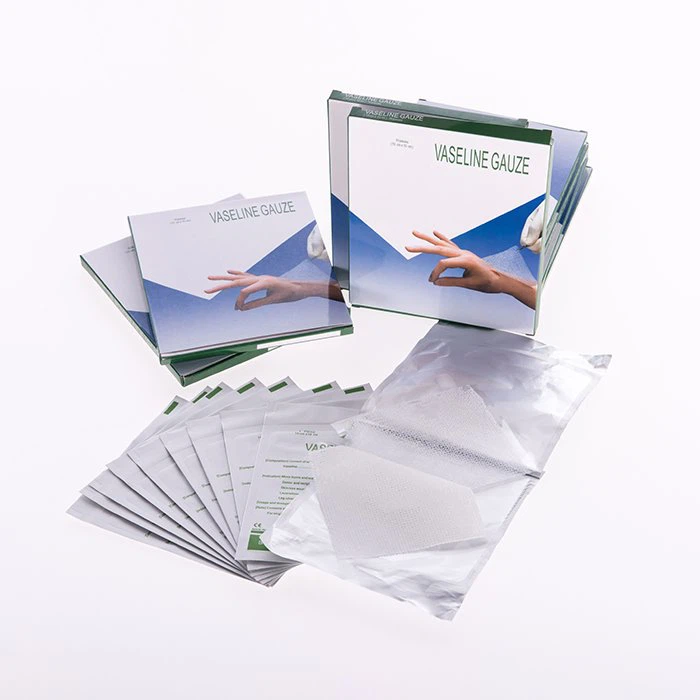

Now, the frequency of changing the Paraffin Gauze Roll Paraffin Gauze Roll on a wound depends on several factors. One of the most crucial factors is the type of wound.
Acute Wounds
Acute wounds are usually fresh wounds, like cuts, scrapes, or surgical incisions. For these types of wounds, in the initial days, you might need to change the Paraffin Gauze Roll more frequently. In the first 24 - 48 hours, changing it once a day is a good idea. This is because right after the injury, there's a lot of exudate (that's the fluid that comes out of the wound). Changing the gauze regularly helps keep the wound clean and prevents the build - up of bacteria.
As the wound starts to heal, usually after 2 - 3 days, the amount of exudate decreases. At this point, you can reduce the frequency of changing the gauze to every 2 - 3 days. You can tell if the wound is healing well if the exudate becomes less in quantity and more clear in color. Also, the wound edges should start to come together, and there should be less redness and swelling.
Chronic Wounds
Chronic wounds are a whole different ballgame. These are wounds that take a long time to heal, like diabetic foot ulcers, pressure ulcers, or venous leg ulcers. The frequency of changing the Paraffin Gauze Roll for chronic wounds depends a lot on the amount of exudate and the condition of the wound bed.
If the chronic wound has a high amount of exudate, you may need to change the gauze every day or even twice a day. High exudate can cause maceration (softening and breaking down of the skin around the wound) if the gauze is left on for too long. Maceration can lead to more complications and slow down the healing process.
On the other hand, if the chronic wound has a low amount of exudate, you can change the Paraffin Gauze Roll every 3 - 5 days. But it's important to keep a close eye on the wound. If you notice any signs of infection, like increased pain, redness, warmth, or a foul smell, you should change the gauze immediately and consult a healthcare professional.
Size of the Wound
The size of the wound also plays a role in how often you should change the Paraffin Gauze Roll. Larger wounds tend to produce more exudate than smaller ones. So, if you have a large wound, you may need to change the gauze more frequently. For example, a large surgical incision that's several inches long may require daily changes in the beginning, while a small cut on your finger might only need a change every 2 - 3 days.
Condition of the Surrounding Skin
The skin around the wound is just as important as the wound itself. If the skin around the wound starts to look irritated, red, or itchy, it could be a sign that the Paraffin Gauze Roll needs to be changed more often. This irritation can be caused by the exudate seeping out and coming into contact with the skin for too long. In such cases, you may need to change the gauze more frequently to keep the surrounding skin dry and healthy.
Signs That It's Time to Change the Paraffin Gauze Roll
Apart from the factors we've discussed above, there are some clear signs that it's time to change the gauze.
- Leakage: If you notice that the exudate is leaking through the gauze and onto your clothes or bandages, it's definitely time for a change.
- Foul Smell: A bad smell coming from the wound is a sign of possible infection. Change the gauze right away and check the wound for other signs of infection.
- Saturation: If the Paraffin Gauze Roll is completely saturated with exudate, it can't do its job properly. A saturated gauze can't create a moist environment and may even cause the wound to become too wet, which can slow down healing.
Importance of Proper Changing Technique
When you're changing the Paraffin Gauze Roll, it's important to do it properly. Wash your hands thoroughly before and after handling the wound. Gently remove the old gauze. If it's stuck to the wound, don't pull it forcefully. You can soak it with a little bit of saline solution to make it easier to remove.
Place the new Paraffin Gauze Roll over the wound, making sure it covers the entire wound area. Secure it with a bandage or tape, but don't make it too tight as it can restrict blood flow to the wound.
Our Paraffin Gauze Roll
As a supplier, I can tell you that our Paraffin Gauze Roll is of the highest quality. It's made from a soft, absorbent gauze that's been evenly impregnated with paraffin. This ensures that it provides a consistent and effective moist environment for the wound.
We also have different sizes and thicknesses available to suit different types of wounds. Whether you're dealing with a small cut or a large chronic wound, we've got the right Paraffin Gauze Roll for you.
If you're a healthcare provider, a pharmacy, or someone who's just looking for high - quality wound care products, we'd love to talk to you. We can offer competitive prices, reliable delivery, and excellent customer service. Whether you need a small quantity for personal use or a large order for your medical facility, we're here to meet your needs. So, if you're interested in purchasing our Paraffin Gauze Roll, don't hesitate to reach out for a procurement discussion.
References
- National Pressure Ulcer Advisory Panel, European Pressure Ulcer Advisory Panel, and Pan Pacific Pressure Injury Alliance. Prevention and Treatment of Pressure Ulcers: Quick Reference Guide. Emily Haesler (Ed.). Cambridge Media: Osborne Park, Western Australia; 2014.
- Wound Healing Society. Chronic Wound Management: A Clinical Practice Guideline. 2nd ed. Wound Healing Society; 2019.
- Acute Wound Care: Principles and Practice. 4th ed. Elsevier; 2018.