

Can Vaseline Gauze Roll be used on deep cuts?
Dec 25, 2025
Can Vaseline Gauze Roll be used on deep cuts?
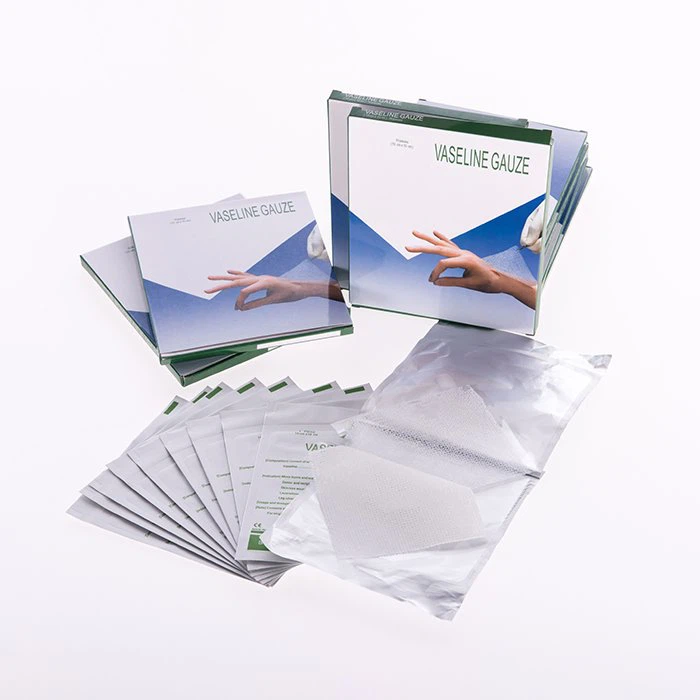

As a supplier of Vaseline Gauze Roll, I am often asked various questions about the product's application in different wound - care scenarios. One of the most frequently asked questions is whether Vaseline Gauze Roll can be used on deep cuts. In this blog post, I will delve into this topic and provide a comprehensive answer based on scientific knowledge and practical experience.
Understanding Vaseline Gauze Roll
Before we discuss its application on deep cuts, let's first understand what Vaseline Gauze Roll is. Vaseline, also known as petroleum jelly, is a semi - solid mixture of hydrocarbons. When it is incorporated into a gauze roll, it forms a product that combines the absorbent properties of the gauze with the occlusive and moisturizing properties of Vaseline.
The Vaseline in the gauze roll helps to create a moist environment over the wound. This is crucial because a moist wound environment has been shown to promote faster wound healing. It minimizes the formation of a hard scab, which can slow down the healing process and may lead to more scarring. Additionally, the occlusive nature of Vaseline helps to protect the wound from external contaminants such as bacteria and dirt.
Deep Cuts: Characteristics and Healing Requirements
Deep cuts are more severe wounds that penetrate through multiple layers of the skin, often reaching the subcutaneous tissue. These cuts can cause significant blood loss and are at a higher risk of infection due to the exposure of deeper tissues.
For deep cuts to heal properly, they need to undergo a series of physiological processes. First, hemostasis must occur to stop the bleeding. Then, the wound goes through an inflammatory phase, during which white blood cells move to the site to fight off any potential infections. After that, the proliferation phase begins, where new tissue is formed to repair the damaged area. Finally, the maturation phase takes place, during which the newly formed tissue remodels.
Using Vaseline Gauze Roll on Deep Cuts
Advantages
- Moist Wound Healing: As mentioned earlier, Vaseline Gauze Roll can create a moist environment for the wound. This is beneficial for deep cuts as it can facilitate the movement of cells involved in the healing process, such as fibroblasts. Fibroblasts are responsible for producing collagen, which is essential for the formation of new tissue. In a moist environment, these cells can function more efficiently, leading to faster and better - quality wound healing.
- Protection Against Infection: The occlusive layer provided by the Vaseline in the gauze roll can act as a physical barrier against bacteria and other contaminants. This is especially important for deep cuts, which are more vulnerable to infections. By reducing the risk of infection, the wound can heal more smoothly without the interference of secondary complications.
- Reduced Adhesion: Vaseline Gauze Roll is less likely to adhere to the wound bed compared to dry gauze. This is crucial for deep cuts because changing dry, adhered dressings can disrupt the newly formed tissue and cause pain to the patient. With Vaseline - impregnated gauze, the dressing can be removed more easily, minimizing trauma to the wound during dressing changes.
Limitations
- Initial Hemostasis: Vaseline Gauze Roll is not designed for initial hemostasis. In the case of deep cuts, the first priority is to stop the bleeding. Pressure dressings or other hemostatic agents may be more appropriate in the beginning. Once the bleeding has been controlled, Vaseline Gauze Roll can be used to promote wound healing.
- Deep - seated Infections: If a deep cut has a deep - seated infection, Vaseline Gauze Roll alone may not be sufficient. In such cases, the wound may need to be properly debrided and treated with appropriate antibiotics. However, Vaseline Gauze Roll can still be used as part of the post - treatment wound - care regimen to support the healing process.
Scientific Evidence
Several studies have shown the benefits of moist wound healing, which is the principle behind using Vaseline Gauze Roll. A research published in the Journal of Wound Care demonstrated that wounds treated in a moist environment had a significantly shorter healing time compared to those in a dry environment. Another study in the International Wound Journal found that the use of occlusive dressings, similar to Vaseline Gauze Roll, reduced the risk of infection in various types of wounds.
Alternative Products
There are other products in the market that can be used for wound care, such as Petrolatum Impregnated Gauze and Paraffin Gauze Roll. These products are also impregnated with substances to create a moist wound environment. However, Vaseline Gauze Roll has a well - established reputation for its safety and effectiveness in wound care.
When to Consult a Healthcare Professional
While Vaseline Gauze Roll can be a useful tool for wound care, it is important to note that deep cuts should be evaluated by a healthcare professional. If the cut is large, bleeding heavily, or shows signs of infection (such as redness, swelling, pus, or a foul odor), immediate medical attention should be sought. A healthcare provider can properly assess the wound, clean it, and determine the most appropriate treatment plan.
Conclusion
In conclusion, Vaseline Gauze Roll can be used on deep cuts after the initial bleeding has been controlled. Its ability to create a moist wound environment, protect against infection, and reduce adhesion makes it a valuable addition to the wound - care toolkit. However, it should not be used as a substitute for professional medical advice, especially in cases of severe or infected deep cuts.
If you are interested in purchasing Vaseline Gauze Roll for your medical or wound - care needs, feel free to reach out to us for more information and to discuss your specific requirements. We are committed to providing high - quality products and excellent customer service.
References
- Journal of Wound Care, relevant research on moist wound healing.
- International Wound Journal, study on occlusive dressings and infection risk reduction.