

What is a Pop Plaster Bandage?
Oct 01, 2025
What is a Pop Plaster Bandage?
Pop plaster bandages, also known as plaster of Paris bandages, have been a staple in the medical and orthopedic fields for many years. As a supplier of high - quality Pop Plaster Bandages, I am excited to share in - depth knowledge about these essential medical products.
Composition and Working Principle
Pop plaster bandages are typically made of a cotton or fiberglass fabric that is impregnated with plaster of Paris, which is calcium sulfate hemihydrate. When the bandage is soaked in water, a chemical reaction occurs. The calcium sulfate hemihydrate combines with water to form calcium sulfate dihydrate, a hard and rigid substance. This reaction is exothermic, meaning it releases heat, but it is a well - controlled process.
The process of hardening starts within a few minutes after the bandage is removed from the water and applied to the affected area. The setting time can vary depending on factors such as the temperature of the water used for soaking, the thickness of the bandage, and the specific formulation of the plaster. Generally, it takes about 10 - 15 minutes for the bandage to start hardening and up to an hour or more to reach full hardness.
Medical Applications
One of the primary uses of Pop Plaster Bandages is in orthopedics. They are commonly used to immobilize fractures. When a bone is broken, it needs to be held in a fixed position to allow it to heal properly. A doctor or orthopedic technician will first align the broken bone and then apply the Pop Plaster Bandage around the affected limb. The hardening of the bandage creates a rigid cast that prevents the bone from moving, reducing pain and promoting proper healing.
For example, in cases of simple fractures of the wrist or ankle, a well - applied Pop Plaster Bandage can provide the necessary support. The cast can be adjusted in terms of its length and width to fit the specific anatomy of the patient. It also offers a custom - fit solution as it can be molded around the contours of the body part during the application process.
In addition to fractures, Pop Plaster Bandages are also used for joint immobilization. Conditions such as severe sprains or ligament injuries may require a joint to be immobilized to allow the damaged tissues to recover. The bandages can be used to create a stable environment around the joint, limiting its movement and reducing the risk of further damage.
Types of Pop Plaster Bandages
There are different types of Pop Plaster Bandages available in the market. The Gypsona Pop Bandage is one such type. It is known for its high - quality plaster impregnation and uniform distribution on the fabric. This ensures consistent hardening and reliable support. The fabric used in Gypsona Pop Bandage is often soft and comfortable against the skin, reducing the risk of skin irritation for the patient.
The Orthopaedic Plaster of Paris Bandage is specifically designed for orthopedic applications. It is engineered to provide maximum strength and stability for broken bones. These bandages usually come in different widths and lengths to accommodate various limb sizes and fracture types. They are often used in hospitals and orthopedic clinics for professional casting.
The Medical Plaster of Paris Bandage is a more general - purpose type. It can be used in a variety of medical settings, not just orthopedics. For example, it can be used in some cases for wound support or in the creation of custom - made splints for patients with minor injuries.
Advantages of Pop Plaster Bandages
One of the significant advantages of Pop Plaster Bandages is their cost - effectiveness. Compared to some of the newer synthetic casting materials, Pop Plaster Bandages are relatively inexpensive. This makes them a popular choice, especially in regions with limited healthcare budgets or in developing countries where access to more expensive alternatives may be restricted.
They are also highly moldable. During the application process, the bandage can be easily shaped around the body part, providing a snug fit. This is crucial for ensuring proper immobilization and support. The doctor or technician can manipulate the bandage to create a cast that conforms to the unique shape of the patient's limb, which is not always possible with some pre - formed casting products.
Another advantage is their availability. Pop Plaster Bandages are widely stocked in medical supply stores, pharmacies, and hospitals. This means that they can be quickly obtained when needed, which is essential in emergency situations such as treating fractures immediately after an accident.
Disadvantages and Limitations
However, Pop Plaster Bandages also have some limitations. One of the main drawbacks is their weight. Once the bandage hardens, it can be quite heavy, especially when used to create large casts. This can be a burden for the patient, particularly if the cast is on a limb for an extended period. The weight can cause fatigue and discomfort, and in some cases, may even affect the patient's mobility.
Pop Plaster Bandages are also not waterproof. If the cast gets wet, it can become soft and lose its structural integrity. This means that patients with Pop Plaster Bandage casts need to take extra precautions to keep the cast dry, such as avoiding showers or swimming. In some cases, a waterproof cover may be used, but these are not always completely effective.
The hardening process of Pop Plaster Bandages generates heat. While this is a normal part of the chemical reaction, in some cases, it can cause discomfort or even skin burns if the bandage is applied too tightly or if the patient has sensitive skin.
Quality Control and Storage
As a supplier, we understand the importance of quality control. Our Pop Plaster Bandages are manufactured under strict quality standards. We ensure that the plaster is evenly distributed on the fabric to guarantee consistent hardening. The fabric is also carefully selected for its strength and softness to provide a comfortable experience for the patient.
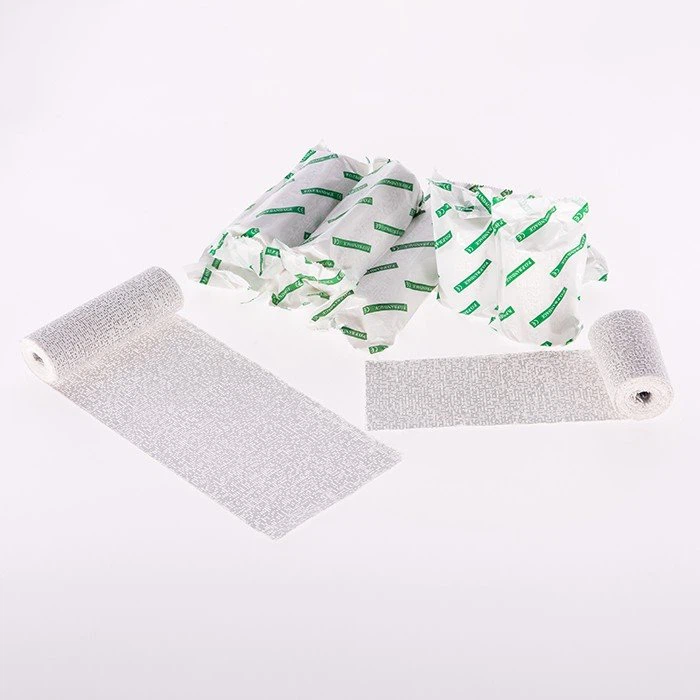

Proper storage is also crucial for maintaining the quality of Pop Plaster Bandages. They should be stored in a dry and cool place. Exposure to moisture can cause the plaster to start reacting prematurely, reducing its effectiveness. We provide detailed storage instructions to our customers to ensure that the bandages remain in optimal condition until they are used.
Conclusion
Pop Plaster Bandages are an important medical product with a long - standing history in orthopedics and other medical fields. Despite their limitations, their cost - effectiveness, moldability, and wide availability make them a valuable option for immobilizing fractures and supporting injured joints.
If you are a medical institution, a healthcare provider, or an individual in need of high - quality Pop Plaster Bandages, we are here to serve you. We offer a range of Pop Plaster Bandages, including the Gypsona Pop Bandage, Orthopaedic Plaster of Paris Bandage, and Medical Plaster of Paris Bandage. Contact us for more information on our products and to start a procurement discussion. We are committed to providing you with the best - quality bandages to meet your medical needs.
References
- Hoppenfeld, S., & deBoer, P. (1994). Surgical Exposures in Orthopaedics: The Anatomic Approach. Lippincott Williams & Wilkins.
- Miller, M. D., & Thompson, S. R. (2004). DeLee & Drez's Orthopaedic Sports Medicine: Principles and Practice. Saunders.
- Skinner, H. B. (2006). Current Diagnosis & Treatment in Orthopedics. McGraw - Hill Medical.