

What is the fatigue strength of Plaster of Paris Gauze?
Jan 14, 2026
As a supplier of Plaster of Paris Gauze, I've often been asked about its fatigue strength. Fatigue strength is a critical property, especially in applications where the material is subjected to repeated loading and unloading cycles. In this blog, I'll delve into what fatigue strength means for Plaster of Paris Gauze, the factors that influence it, and its implications for various uses.
Understanding Fatigue Strength
Fatigue strength refers to the maximum stress that a material can withstand for a specified number of cycles without failure. When a material is repeatedly loaded and unloaded, small cracks can initiate and grow over time, eventually leading to failure. This is different from static strength, which is the material's ability to withstand a single, constant load.
For Plaster of Paris Gauze, fatigue strength is particularly important in medical applications, where it is used for immobilizing fractures and supporting injured limbs. Patients may move their limbs slightly during the healing process, subjecting the plaster cast to repeated stress. If the plaster has low fatigue strength, it may crack or break prematurely, compromising the effectiveness of the treatment.
Factors Affecting the Fatigue Strength of Plaster of Paris Gauze
Composition of Plaster of Paris
The quality and composition of the plaster of Paris used in the gauze play a significant role in its fatigue strength. High - quality plaster of Paris, which is finely ground and has a consistent chemical composition, tends to have better fatigue resistance. Impurities in the plaster can act as stress concentrators, promoting crack initiation and reducing fatigue life.
Gauze Structure
The design and structure of the gauze also impact fatigue strength. A well - woven gauze provides better support and distribution of stress throughout the plaster cast. The density of the weave, the type of fibers used, and the overall porosity of the gauze can all affect how the plaster adheres to the gauze and how stress is transferred within the material.
Moisture Content
Moisture can have a detrimental effect on the fatigue strength of Plaster of Paris Gauze. When the plaster absorbs moisture, it can weaken the bonds between the plaster particles, reducing its overall strength. In addition, moisture can cause the plaster to expand and contract, which can lead to the development of cracks over time.
Application Technique
The way the Plaster of Paris Gauze is applied can significantly influence its fatigue strength. If the plaster is not mixed properly, or if the gauze is not wrapped tightly enough around the limb, it can result in uneven stress distribution within the cast. This can lead to areas of high stress concentration, increasing the likelihood of fatigue failure.
Measuring the Fatigue Strength of Plaster of Paris Gauze
Measuring the fatigue strength of Plaster of Paris Gauze typically involves subjecting samples to cyclic loading in a laboratory setting. A testing machine applies a repeated load to the plaster sample at a specific frequency and amplitude. The number of cycles until failure is recorded, and the fatigue strength is calculated based on the applied stress.
However, it's important to note that laboratory tests may not fully replicate the real - world conditions that Plaster of Paris Gauze is exposed to. In medical applications, factors such as the movement of the patient's limb, the presence of body fluids, and the interaction with clothing can all affect the fatigue performance of the plaster cast.
Implications for Different Applications
Medical Use
In the medical field, the fatigue strength of Plaster of Paris Gauze is crucial for ensuring the stability of fractures during the healing process. A plaster cast with high fatigue strength can withstand the normal movements of the patient's limb without cracking or breaking, providing continuous support and protection. This reduces the risk of re - injury and promotes proper healing.
Industrial Use
In industrial applications, Plaster of Paris Gauze may be used for mold - making or as a temporary support structure. In these cases, the fatigue strength of the material determines how many times it can be reused or how long it can withstand the stresses of the manufacturing process. A higher fatigue strength means longer service life and potentially lower costs.
Our Plaster of Paris Gauze Products
As a supplier, we offer a range of Plaster of Paris Gauze products designed to meet different needs. Our products are made from high - quality plaster of Paris and carefully woven gauze to ensure optimal fatigue strength.
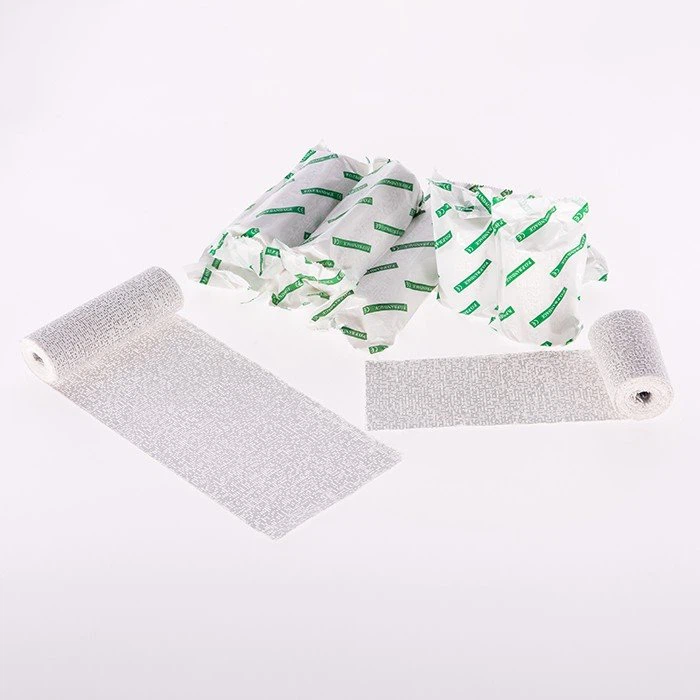

We also provide Plaster of Paris Bandage Rolls, which are convenient for medical professionals to use. These rolls are pre - cut and ready to apply, saving time and ensuring a consistent application.
In addition, our Gypsona Pop Bandage is a popular choice for its excellent conformability and high fatigue resistance. It is designed to provide a comfortable and secure fit for patients.
Conclusion
The fatigue strength of Plaster of Paris Gauze is a complex property that is influenced by multiple factors, including the composition of the plaster, the structure of the gauze, moisture content, and application technique. Understanding these factors is essential for ensuring the quality and performance of Plaster of Paris Gauze in various applications, especially in the medical field.
As a supplier, we are committed to providing high - quality Plaster of Paris Gauze products with excellent fatigue strength. If you are interested in our products or have any questions about fatigue strength or other properties of Plaster of Paris Gauze, please feel free to contact us for procurement and further discussion.
References
- ASTM International. (Year). Standard test methods for fatigue testing of materials.
- Medical Journal of Orthopedics. (Year). The role of plaster cast fatigue strength in fracture healing.
- Industrial Materials Research. (Year). Fatigue behavior of plaster - based materials in manufacturing processes.